Rob’s Recipe of the Week: Hip Turnips
Turnips are one of the things I find it hardest to find recipes for. Luckily it seems they are gaining a “hip status” over in New York, so I’ve found a few recipes from Bon Appetit (If you like cooking shows I recommend their youtube channel, especially “It’s Alive” with Brad). I’ve no idea how this one will turn out but I look forward to trying it!
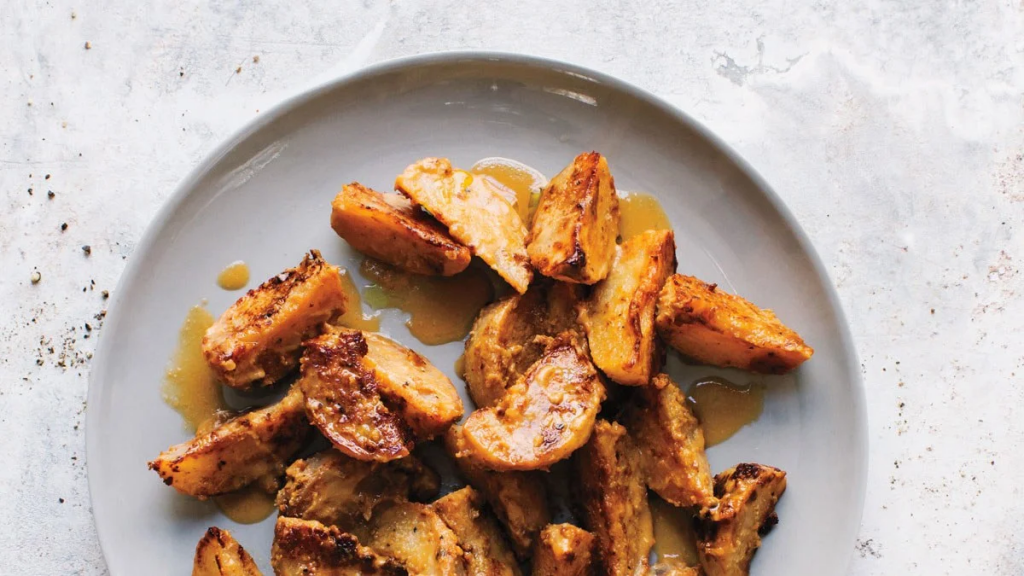
Miso-glazed turnips
Ingredients:
1 pound (450g) turnips trimmed, scrubbed and cut into 2cm wedges
2 tablespoons white miso (near the spices in supermarkets normally)
2 tablespoons unsalted butter
1 teaspoon sugar
2 tablespoons lemon juice
salt and pepper
Method:
Combine turnips, miso, butter, and sugar in a medium skillet/pan, then add water just to cover vegetables. Season with salt and pepper.
Bring to a boil over medium-high heat and cook turnips, turning occasionally, until they are tender and liquid is evaporated, 15–20 minutes.
Once all the liquid has cooked off, keep cooking turnips, tossing occasionally, until they are golden brown and caramelized and the sauce thickens and glazes the vegetables, about 5 minutes longer.
Add lemon juice and a splash of water to pan and swirl to coat turnips. Season with salt and pepper.
Taken from:
https://www.bonappetit.com/recipe/miso-glazed-turnips
as part of a wider set of recipes:
https://www.bonappetit.com/recipes/slideshow/turnip-18-recipes-underrated-root-vegetable
Rebecca’s Recipe of the Week: Golden, Saffron Mash
Saffron tints this dish a beautiful sunny yellow—just the thing to lift the spirits. Anna Jones recommends topping the mash with a poached egg and serving with a side of garlic-infused sautéed greens and toasted almonds. Or you could just eat it in bed, as Nora Ephrom recommended in Heartburn: ‘Nothing like mashed potatoes when you’re feeling blue. Nothing like getting into bed with a bowl of hot mashed potatoes already loaded with butter, and methodically adding a thin cold slice of butter to every forkful. . . Most people do not have nearly enough mashed potatoes in their lives’.
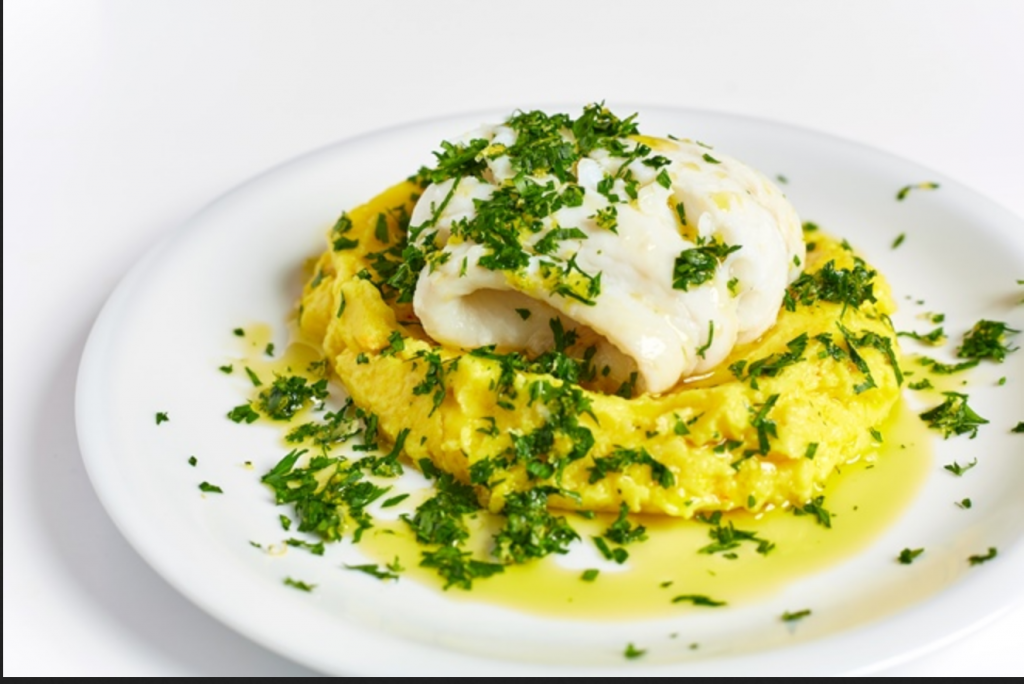
Golden Saffron Mash
Serves 4
Ingredients
2 pinches of saffron
250ml boiling water
1kg potatoes, peeled or not, as you prefer
50g butter
1 clove garlic, minced
salt and pepper
Preparation
Mix the saffron with the boiling water and set aside to infuse.
Put the potatoes, whole, in a pan and cover with cold water. Bring slowly to the boil, and then simmer over very low heat until they are very soft and tender. Depending on the size of the potatoes, this will take from 25 to 60 minutes.
Meanwhile, melt the butter in a frying pan over medium heat. Once it’s bubbling add the garlic and sauté for a minute until it begins to turn golden. Add the saffron water, and simmer for a few more minutes. Set aside.
Once the potatoes are soft, drain and then return to the pan. Mash them well.
Add the saffron butter and mash some more. Season to taste with salt and pepper and serve.
Recipe adapted from Anna Jones, The Modern Cook’s Year (2017).
Rob’s Recipe of the Week: Thyme for Soup
Much as I’m excited to get back to my favourite celeriac recipe (Celeriac Pasta Ribbons Weekly update Jan 3 2019), I’m in desperate need of replenishing my lunch stores at the moment and nothing is better than a good autumnal soup. This should use a few different items from this weeks share, so enjoy!
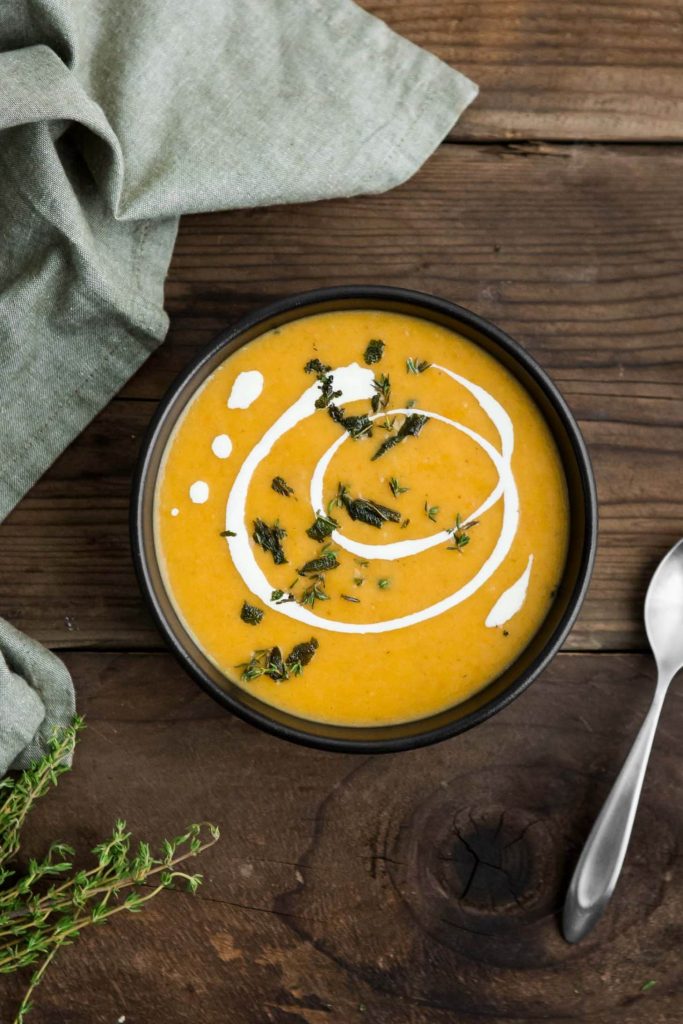
Celeriac soup with thyme
Prep Time: 15 minutes
Cook Time: 45 minutes
Total Time: 60 minutes
Yield: 2 large servings
Ingredients:
1 medium celeriac
2 carrots
2 medium potatoes
1 medium shallot (or onion if not)
2 cloves large garlic
4 tablespoons olive oil
1/4 teaspoon salt
0.75 to 1L veg stock
5 sprigs thyme
10 fresh sage leaves (I’ll probably use dried sage to save a trip to the shops)
1 to 2 tablespoons heavy cream (optional)
Preparation:
Preheat oven to 220° C (might need turning down!)
Cut off skin and roots of celeriac. Dice celeriac, carrots, and potatoes into 1cm cubes. Place on a baking sheet or in roasting pan. Roughly mince shallot and garlic. Add to dice vegetables. Drizzle with 2 tbsn olive oil and sprinkle with salt. Toss until all the vegetables are well coated. Roast in the oven 35 to 40 minutes or until the vegetables are beginning to caramelize and brown.
While vegetables are roasting, heat 2 tablespoons olive oil over medium-high heat until hot. Fry sage, 3 to 4 leaves at a time until crisp. Remove from heat and set aside.
When vegetables are done roasting, transfer them into a blender. Add thyme leaves from 5 sprigs into blender with most of vegetable stock. Puree until smooth. Add more vegetable stock to achieve the consistency you desire.
Transfer soup to a medium pot. Bring to boil over medium heat. Serve with crispy sage, extra thyme and a drizzle of heavy cream.
If you are using an immersion blender consider peeling the potatoes before roasting to achieve a smooth consistency in the soup.
The soup consistency is on the thicker side. After pureeing, add more stock if desired to get a thinner soup.
Taken from: https://naturallyella.com/celeriac-soup/
Rebecca’s Recipe of the Week: Carrots Agrodolce
‘Agrodulce’, Italian for sour-sweet, is a technique for cooking vegetables in a mixture of oil, vinegar, salt and sugar. It’s very easy; 20 minutes should be ample, unless you like to take your time in cutting the carrots into matchsticks. The results are far greater than the sum of the parts. I don’t think you will have any left over; we certainly didn’t.
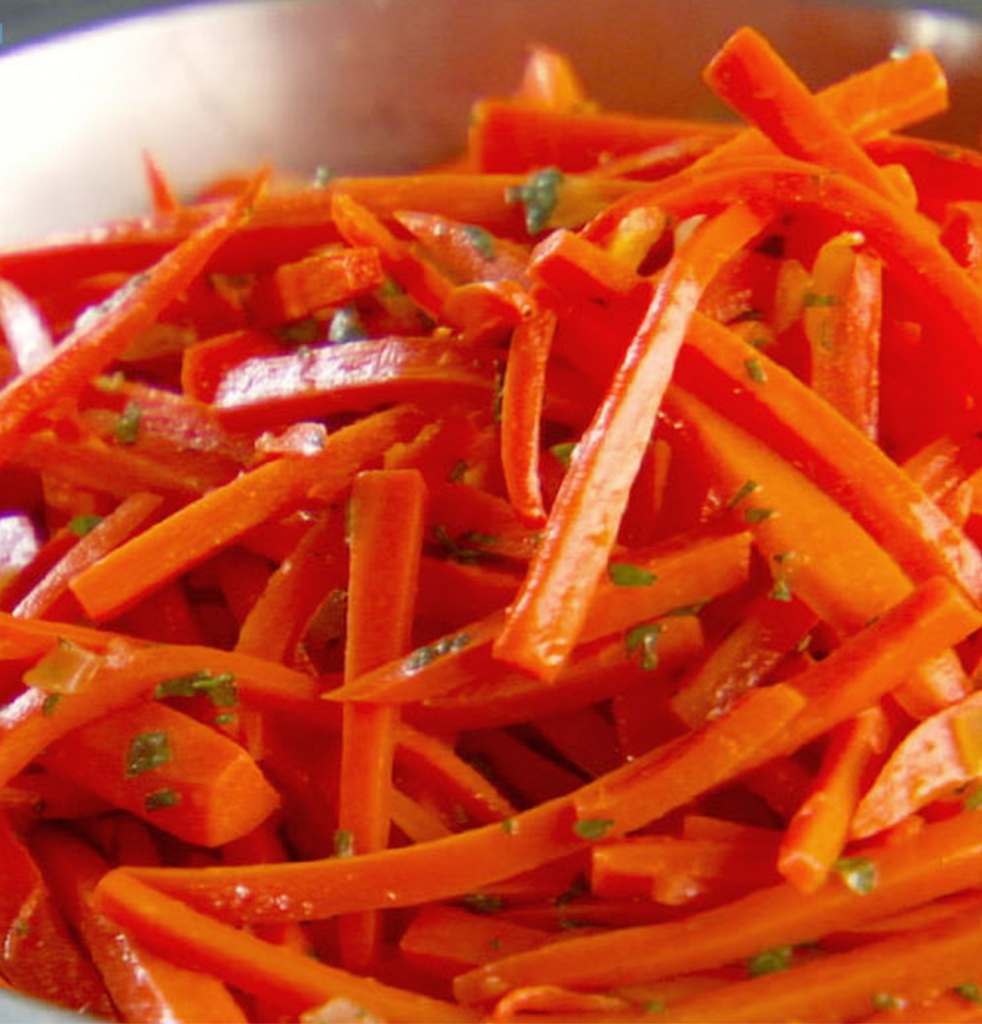
Carrots Agrodolce
Serves 3 as a side dish
Ingredients
500g carrots (peel and finely slice into matchsticks)
1½ tablespoons olive oil
1/3 cup of water
2 tablespoons minced onion
¾ teaspoon sugar
1 tablespoon red wine vinegar
¾ teaspoon salt
¼ teaspoon freshly ground black pepper
2 tablespoons fresh mint
Preparation
First cut the carrots into matchsticks. You can do this by cutting each carrot lengthwise into slabs, and then cutting each slab into thin thin matchsticks.
Place the carrots, olive oil, and water in a saucepan over medium-high heat. Bring to a boil and cook, uncovered, until the water has evaporated, which will take about 7 minutes.
Stir in the onion and cook for 1 minute. Add the sugar, vinegar, salt, and pepper, and stir until there is a glaze coating the carrots, about 30 seconds.
Remove from the heat and stir in the mint. Place in an attractive bowl and serve.
Recipe adapted from Mad Hungry.
Rebecca’s Recipe of the Week: Coconut, Potatoes, Beans
Meera Sodha’s East is excellent! Here is a gentle coconut-milk curry called an ‘istoo’, which is apparently derived from the English word ‘stew’. She recommends serving with aubergine pickle, and rice or an Indian flatbread. Some fried aubergine slices also go well.
Potato and Green Bean Istoo
Serves 2-3
Ingredients
2 tablespoons rapeseed oil
10 curry leaves
4cm cinnamon stick, broken in 2
1 medium onion (or 2 small onions), sliced
2cm piece of fresh ginger, peeled and grated
4 cloves of garlic, peeled and grated
1 green chile, slit in 2
650g small potatoes, halved
1 teaspoon each salt and pepper
1 400ml tin of coconut milk
250g green beans, topped and tailed
Preparation
In a casserole dish for which you have a lid, heat the oil on medium heat. Once it is hot add the curry leaves, cinnamon stick and onion. Reduce head to low and cook for 10 minutes, until the onion is soft but not brown. Add the ginger, garlic and chile, and cook for another 2-3 minutes.
Add the potatoes, salt and pepper and stir in the coconut milk. Then swill out the tin with about 100ml of water and add that to the pan as well. The potatoes should be just covered, so add more water if need be. Bring to a boil, and then reduce to a simmer and cook for 10-15 minutes, or until the potatoes are tender.
Add the beans, cover, and simmer for another 5 to 6 minutes, or until the beans are tender. Now it’s ready!
Recipe adapted from Meera Sodha, East (2019).
Rob’s Recipe of the Week: Sunny sweetcorn noodles
I wasn’t quite sure what to suggest this week and was resigned to the oven chips recipe I’ve been holding in reserve, until I spotted this noodle dish. It’s quite different to what I would normally cook and I’m excited to give it a try!
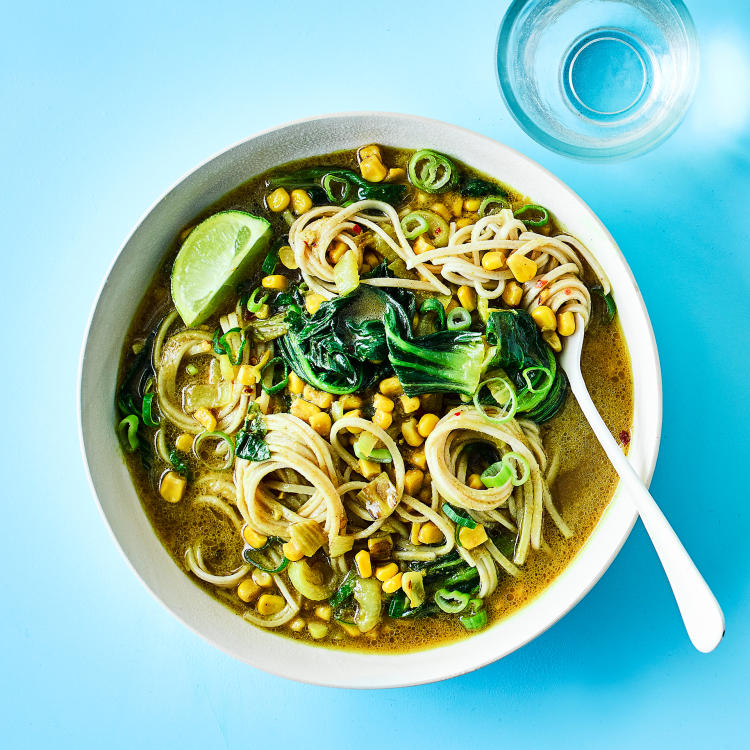
Sunny sweetcorn noodles
Ingredients:
- Chilli flakes (I’ve still got some Canalside dried chillies to get through!)
- coconut cream or coconut milk (add less water if not using cream)
- 2 garlic cloves
- 2 tbsp thai green curry paste
- lime or lime juice
- 250g pak choi
- 35ml soy sauce
- 1 spring onion (optional garnish)
- 1tsp turmeric
- sweetcorn
- noodles (2 nests)
- 1 veg stock cube
Method:
Peel and thinly slice garlic and boil the kettle
Add sweetcorn on the cob to large pan of water and boil for 10 minutes
Cut pak choi in half to separate stems from leaves. Leave leaves whole and cut stems into bitesize pieces
In a large pan (preferably with a lid) heat some oil (high heat) then add turmeric and cook for 30 seconds.
Add sliced garlic and curry paste and cook for 2 minutes
Use this time to put noodles on to boil for about 5 minutes or according to instructions
Add pak choi stems and a large pinch of salt and cook for ~3 minutes with lid on until stems are tender
If using coconut cream, mix this with stock and 350ml of hot water. If coconut milk, add this and stock direct to pan.
Add cream mix / cocunut milk and stock to the pan of veg, along with the chilli flakes and soy sauce
Set to low heat whilst you take out the sweetcorn and use a knife to separate the corn from the cob
Add sweetcorn and pak choi leaves to the pan, add water to achieve your preferred consistency and boil on low heat until leaves have wilted.
Bowl up the noodles and veg soup, adding lime juice and chopped spring onions on top if you’ve got them
Adapted from https://www.gousto.co.uk/cookbook/vegetarian-recipes/sunny-sweetcorn-noodles
2019 – October news: Juice on the Loose in a Fruitful Week
With Saturday’s Apple Day looming, the Wednesday work morning crew trooped to the orchard with one thing in mind: apples. And their expedition was a surprising success – in a year when most orchards have reported very poor harvests, we were pleased to return with over 600kg in tow, with a further load still on the trees to be picked on the Apple Juicing Day.
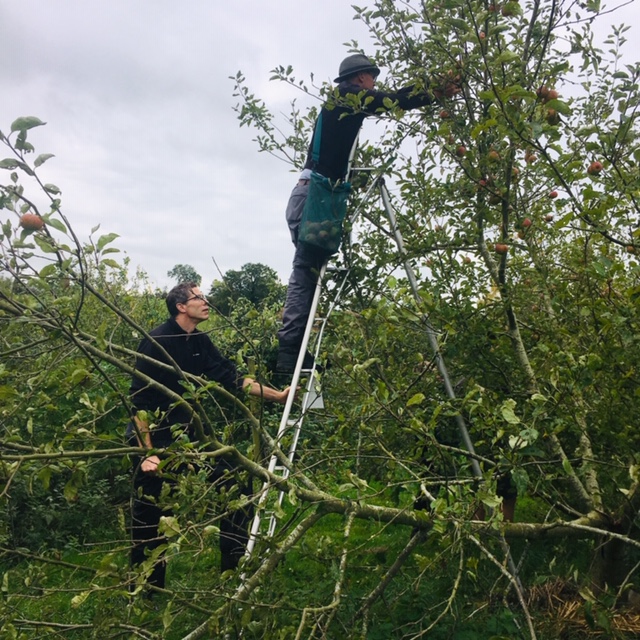
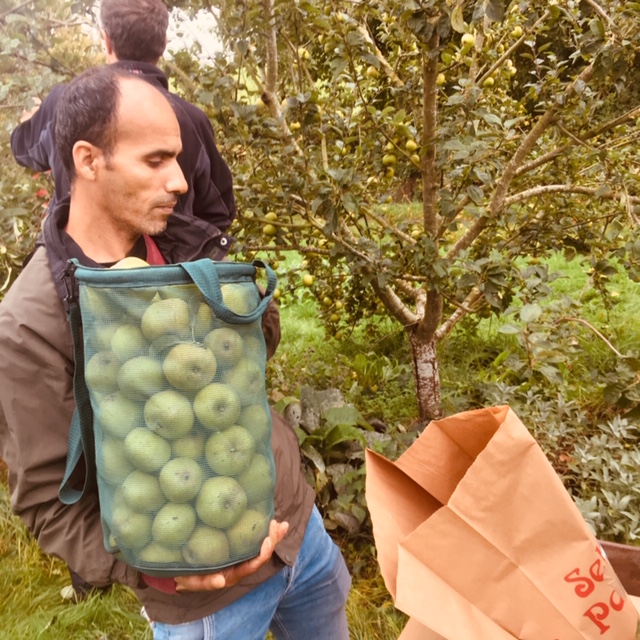
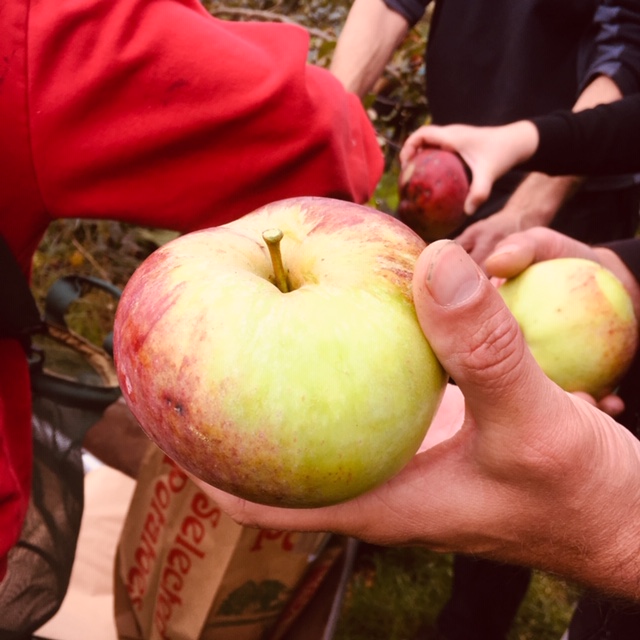
Saturday’s Apple Juicing Day was a huge success! The air was filled with gasps of awe from children and adults alike as endless waterfalls of juice oozed from piles of pulp; homemade mashers slammed down into buckets of apples, crushing them ready for the press and at the end of the line thirst was quenched with the sweet juice of our labours. Over 300L of juice was made in a very well attended event – much of this was shared amongst attendees but 50+ bottles have been pasteurised for future events and several barrels of cider are bubbling away as I write! Thanks to all who participated in a cracking day and hopefully we’ll do it all again next year.
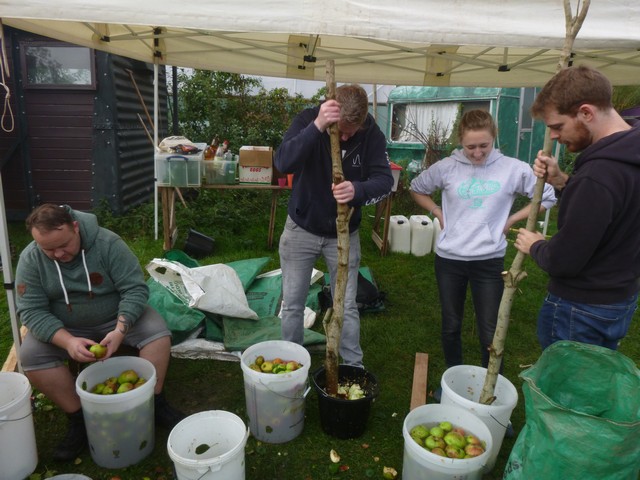
Pressing preps 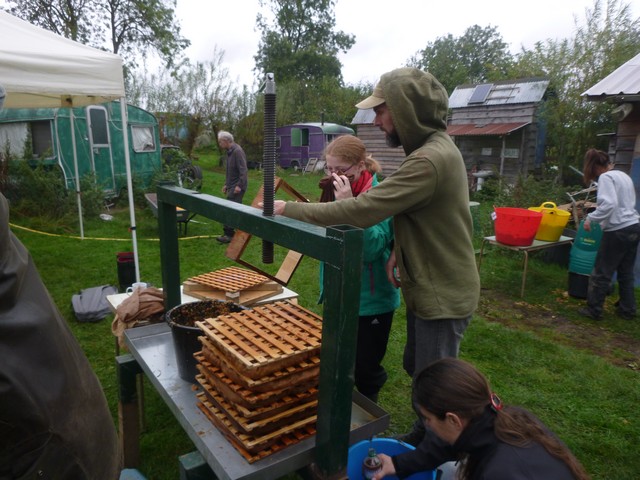
Getting the press going 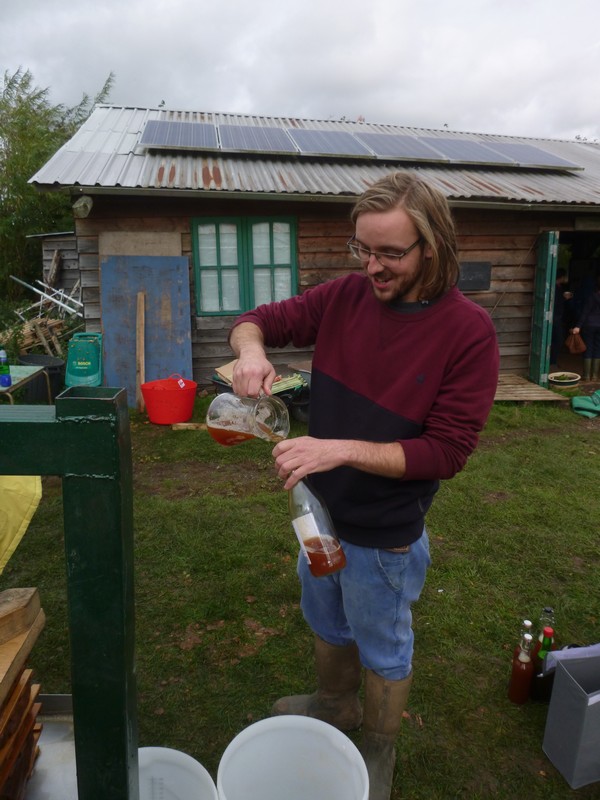
Juice output 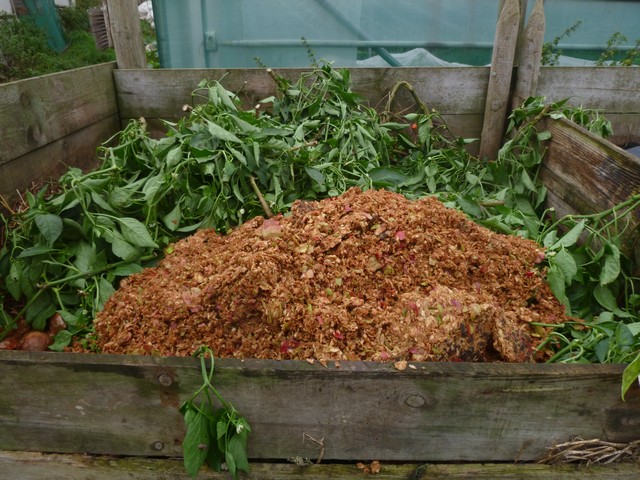
Compost output
Polina’s Recipe: Russian pastila
Here’s a tasty sounding recipe from Polina, one of our produce share members:
As it is apple season, I also thought I share a simple recipe which has been our breakfast staple for a couple of weeks. It is based on traditional Russian sweet called “pastila”, made of apples, eggs, and honey. Here is homemade British “twist”. The recipe can be safely halved – depending on the blender/foodprocessor.
Ingredients:
2lb of apples
3 tablespoons of honey/50gr of sugar (depending on apples)
9 tablespoons of oats (gluten free or not)
3 eggs whites (can be omitted for vegan version)
Spices to taste: ground cinnamon/cardamom/gloves
Preparation:
Core apples (no need to peel) and bake them in the oven on 185 degrees C for 35 minutes. Let them cool down. Place the baked apples in a food processor/blender (I use Blendtec) and process to a smooth pure. Add spices (if using) and honey and process for 2 minutes to mix them in. Turn the mixture into mixing bowl, fold in oats stirring with spatula, then slowly add egg whites whisked to soft peaks (if using). Fill in individual souffle dishes/ramekins (I use small ceramic bowls from Charlie Bigham pies) and bake in the oven at 100 degrees C for about an hour.
Keeps well in a fridge for a few days. Seems equally delicious cold and hot.
Rebecca’s Recipe of the Week: A Lot of Plums
Dom’s assessment of the orchard this week is that there are no more plums, so it is likely (no matter how hard you search) that you’ll find the same now. Perhaps you have another source of plums, or have stashed some in your freezer to be able to enjoy the offering from Rebecca this week:
Here is a sweet, warming chutney to eat with dal, or in a sandwich. Nigella seeds are surprising little black specks, with an intense umami flavour resonate of onions.
Plum and Nigella Seed Chutney
Makes 1 jam-jar
Ingredients
3 teaspoons cumin seeds
12 plums
3 teaspoons nigella seeds
2 tablespoons honey
2 tablespoons grated fresh ginger
2 teaspoons red wine vinegar
1 lime, zest and juice
Preparation
Toast the cumin seeds in a dry pan over medium heat for a few minutes, until they become toasted and smell delicious. Leave them to cool.
Meanwhile stone the plums and chop them roughly into pieces. Put them in a saucepan along with all the other ingredients aside from the cumin seeds.
Grind the now-cooled cumin seeds in a mortar and pestle and add them to the saucepan as well. (Apparently if you grind cumin seeds while they are very hot the flavour is not as good.)
Cook over medium heat for about 15 minutes, or until the mixture is a bit jammy and the plums have broken down.
Cool and decant into a sterilised jar. Store in the fridge.
Recipe adapted from Anna Jones, The Guardian,28 Sept. 2019.
Rob’s Recipe of the Week: An End-of-Summer Soup
My housemate gave me this recipe (adapted from Gordon Ramsey) because he claimed it was the best soup he’s ever had. I overspiced my attempt so i’ll leave you to decide whether he’s right! I topped up my share with a friend’s garden tomatoes, but the recipe can be scaled down if you have less than is needed. I made 5 lunch sized portions from 1.2kg of tomatoes.
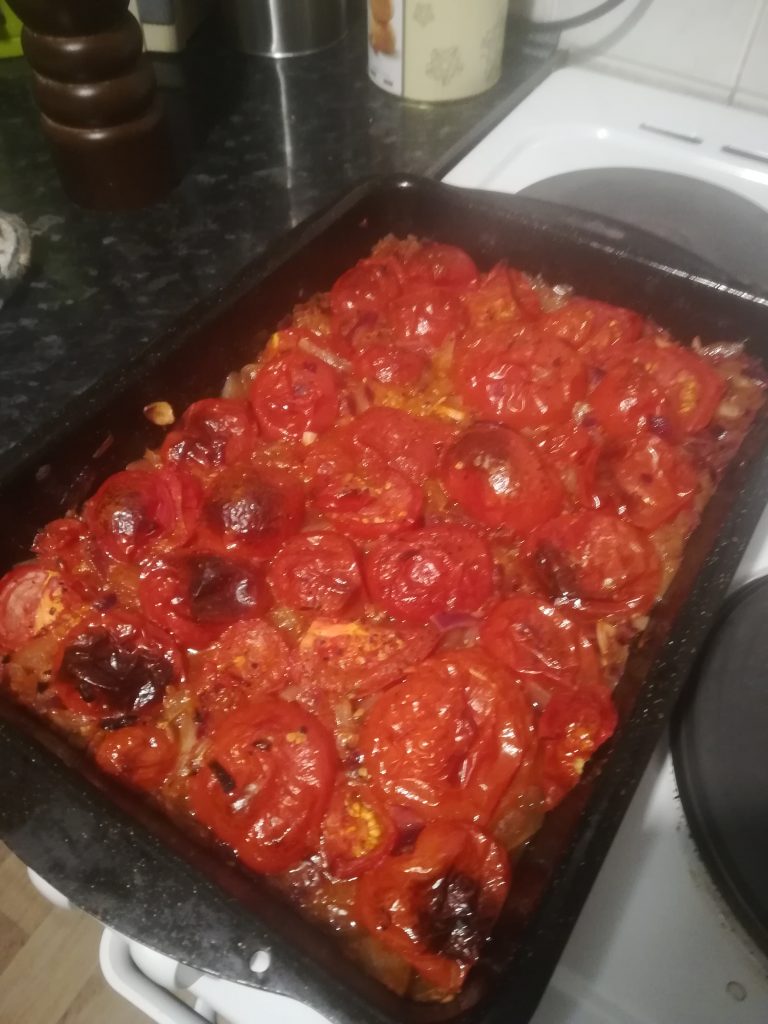
Roasting the tomatoes 
The finished soup!
Tomato soup with sundried tomato pesto
Ingredients:
SOUP:
2 red onions, peeled and sliced
2 garlic cloves, peeled and finely sliced
1⁄2–1 tsp cayenne pepper, to taste (1/2 makes for a spicy soup if you’re using CORE’s cayenne pepper!)
olive oil, for drizzling
1.5kg ripe tomatoes, cored and halved
sea salt and freshly ground black pepper
1 tsp caster sugar
1 tsp balsamic vinegar
1 litre vegetable or chicken stock
100ml double cream (soya alternative works fine)
PESTO:
2–3 tbsp pine nuts
75g sundried tomatoes, drained, oil reserved and finely chopped
50g Parmesan cheese, grated (welcome suggestions for vegan replacements, the cheese is the bulk of the pesto in this recipe so not sure you can manage without)
olive oil
Method:
Preheat oven to 180 degrees C.
Use a roasting tray on the hob at medium heat to brown the onions, garlic and pepper for a few minutes. Then add the tomatoes face down and move to high heat. Season with salt/pepper and add sugar and vinegar. Cook until tomatoes begin to caramelise (3-4 minutes). Stir and move to oven for 20-25 minutes. (If they blacken a little that’s fine, it adds to the flavour)
Make the pesto while you wait. Toast the pine nuts in a frying pan and using a pestle and mortar, pound the sundried tomatoes to a paste, season with salt and add the pine nuts, continuing to pound to resemble pesto. Stir in parmesan and add a good glug each of tomato oil and olive oil to make it look like pesto again.
Get the tomatoes out and back on the hob, adding the stock and simmering for 4-5 minutes. Then add the cream for 2-3 minutes stirring well. Then blend and serve with dollops of pesto on top!